Smart Solutions for Smarter Decisions
Real-time data, predictive analytics and system optimization at your fingertips

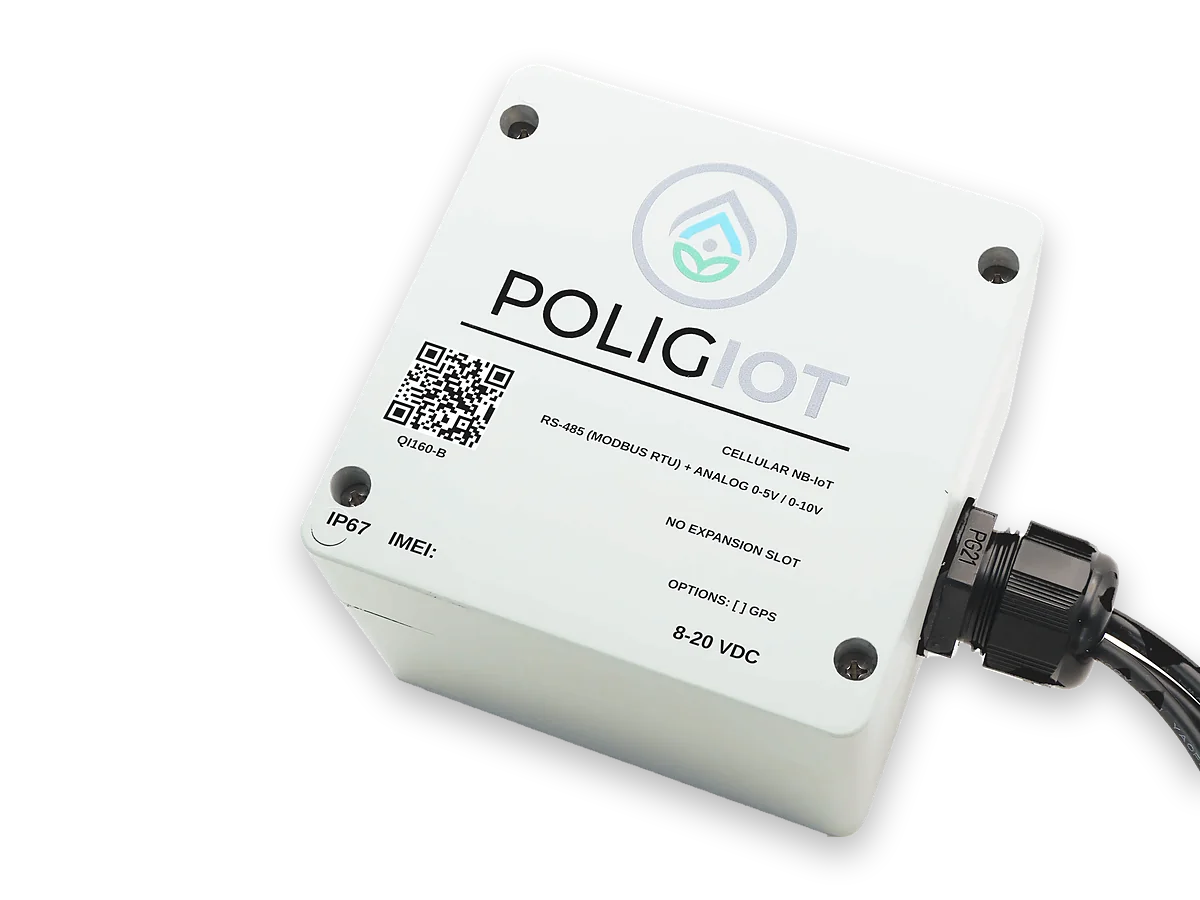
Standalone unit, battery-powered or wired to mains power, with 4 sensors on independent connectors.
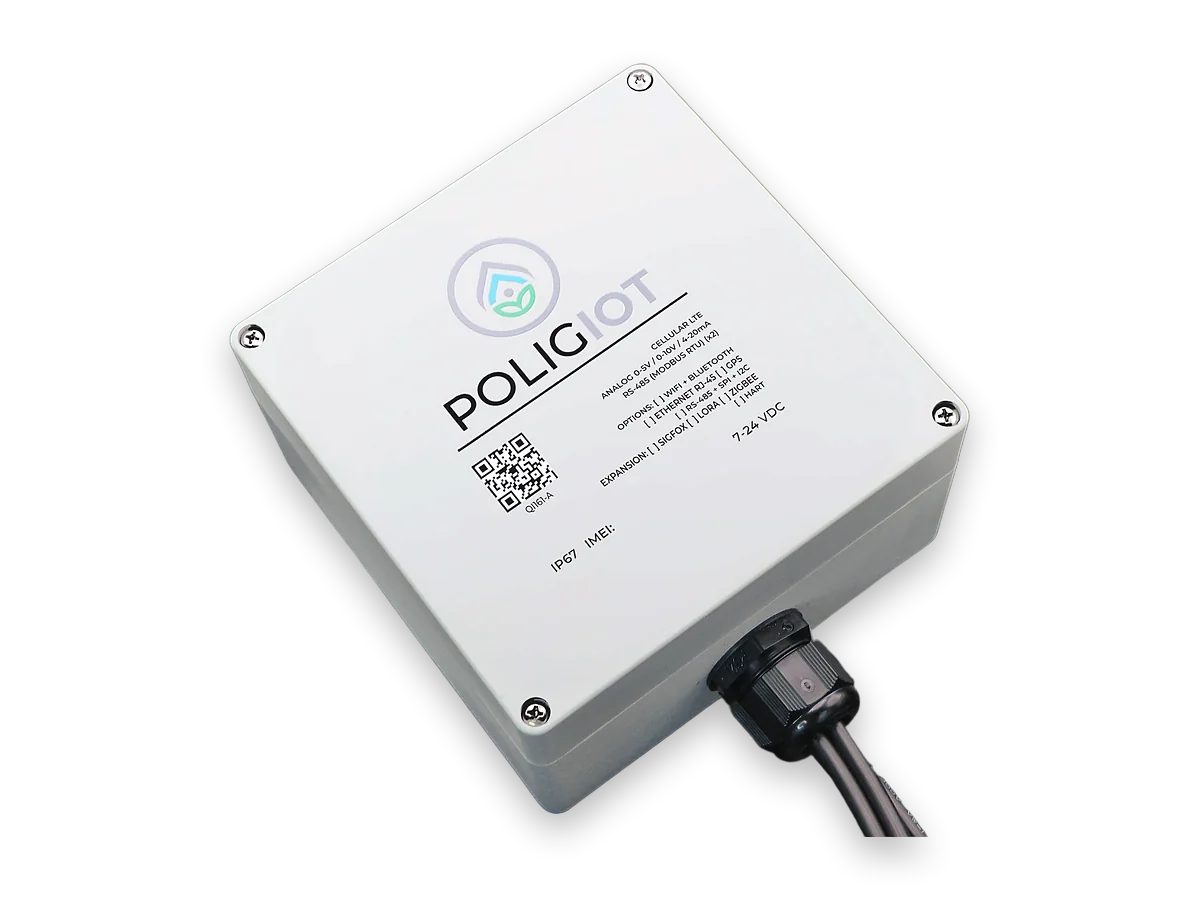
Up to 5 simultaneous sensors, each on its own connector (3 analog and 2 via RS-485), plus an additional standard interface connector.
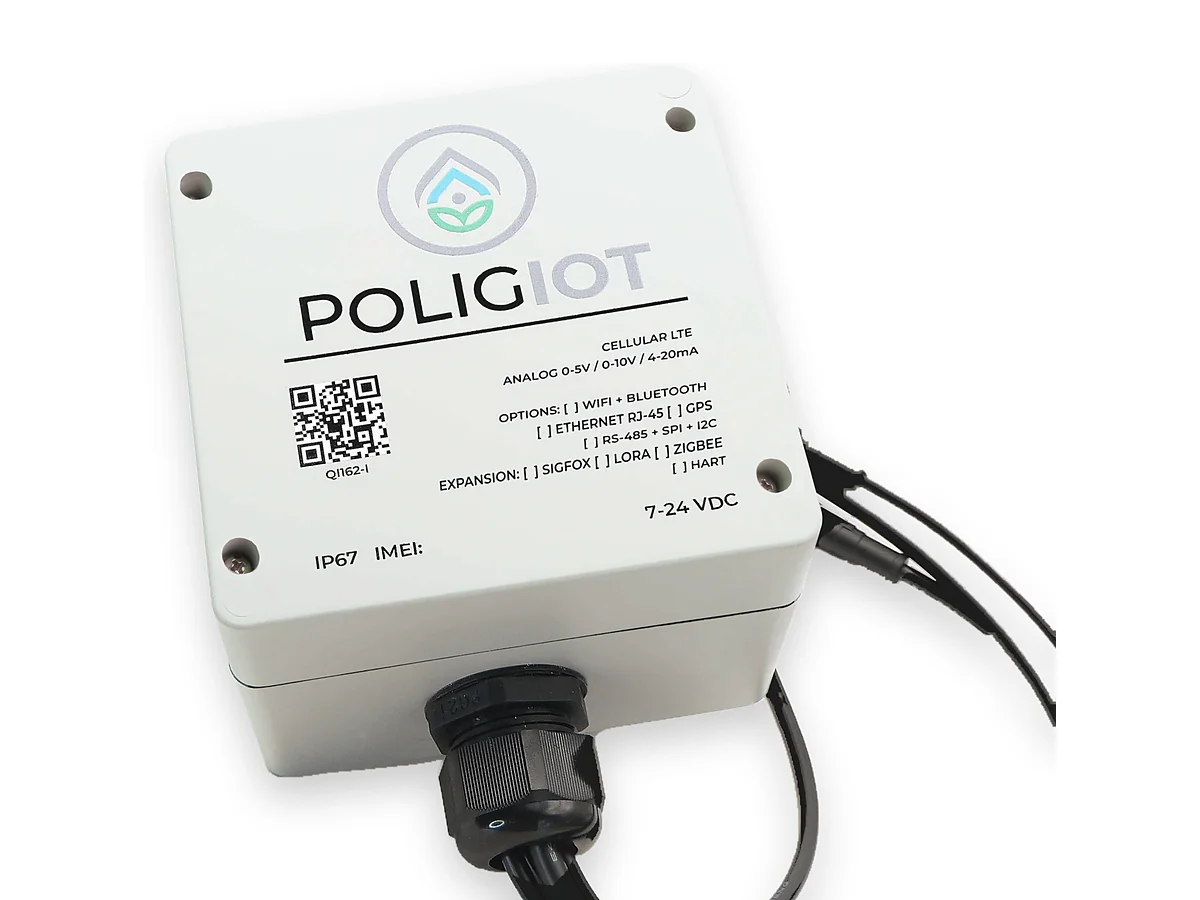
Compact single-sensor input, plus an additional standard interface connector.
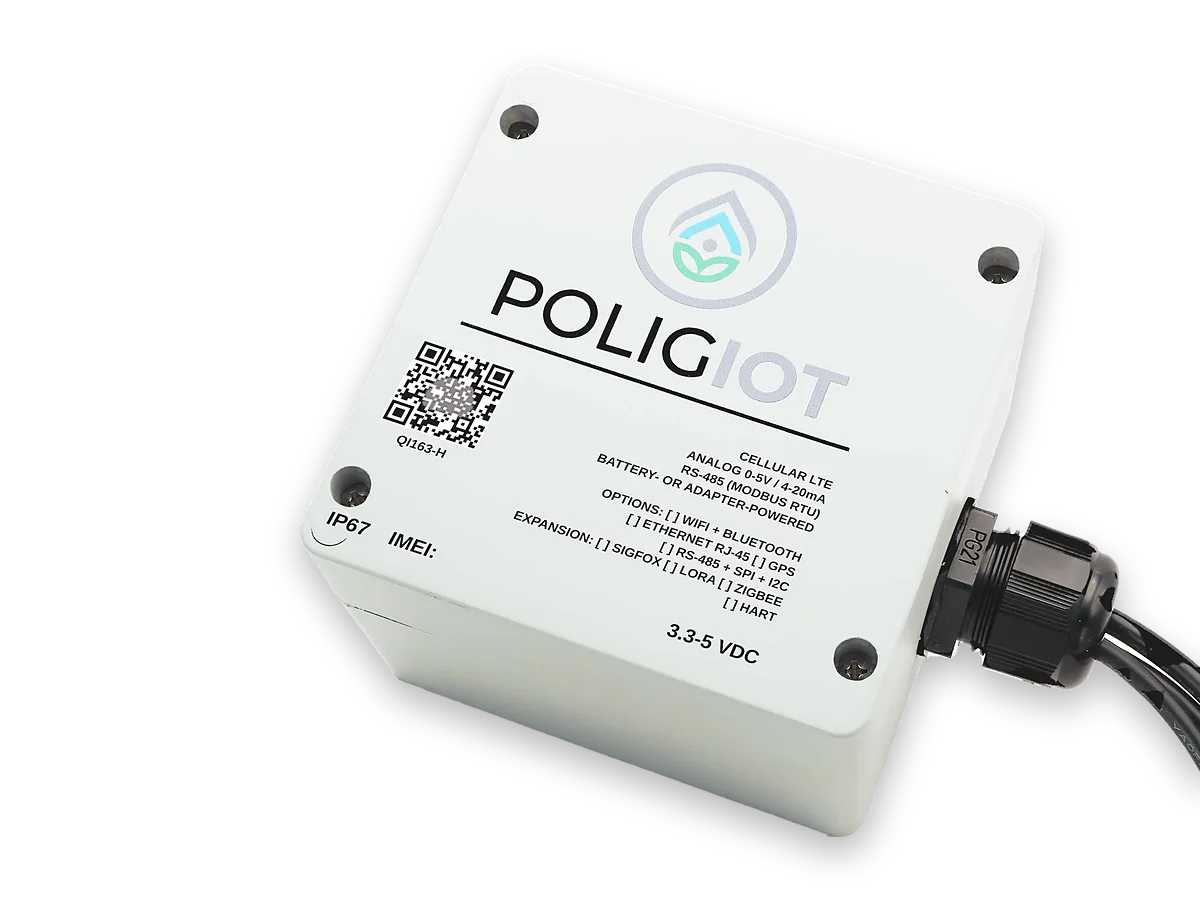
Powered by a rechargeable battery, with 1 sensor, plus an additional standard interface connector.
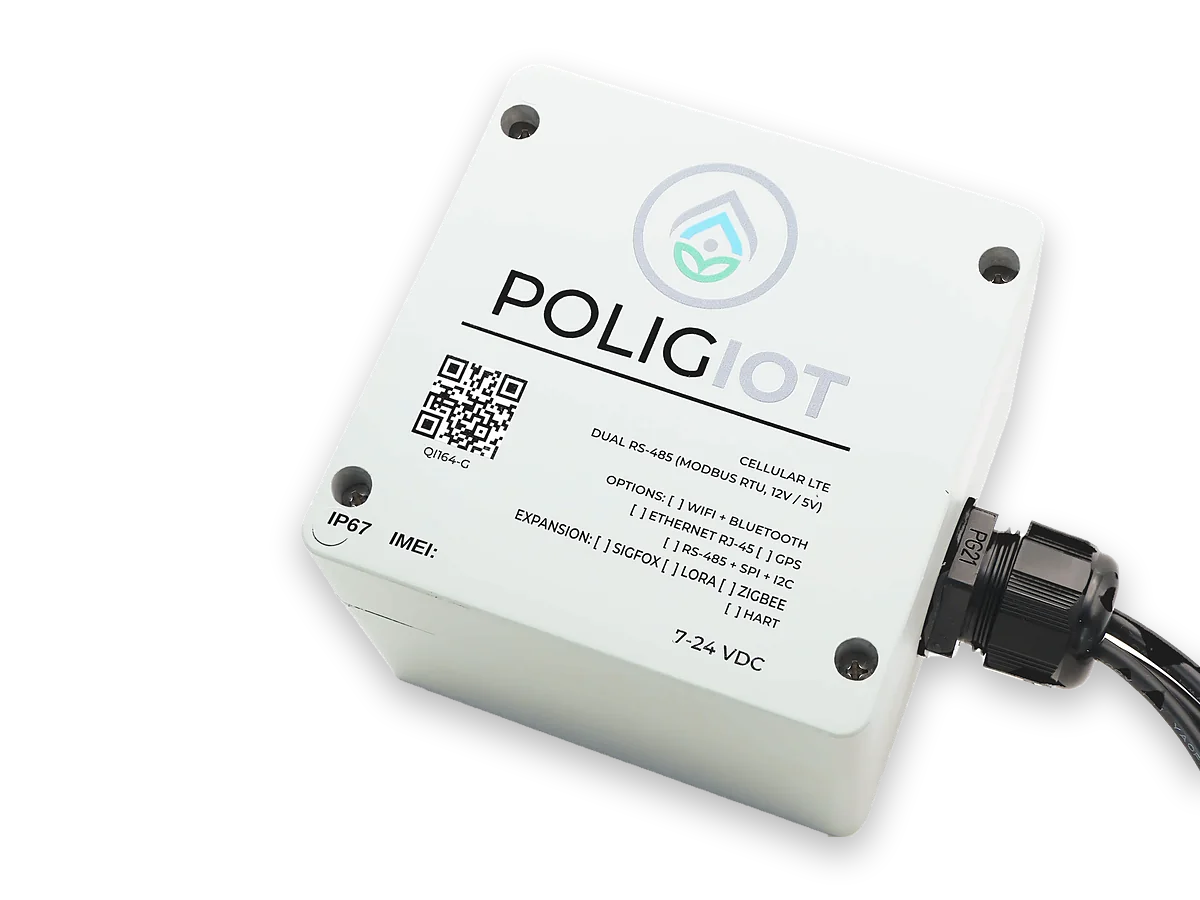
Two industrial sensors, each on its own connector (one at 12V, one at 5V).
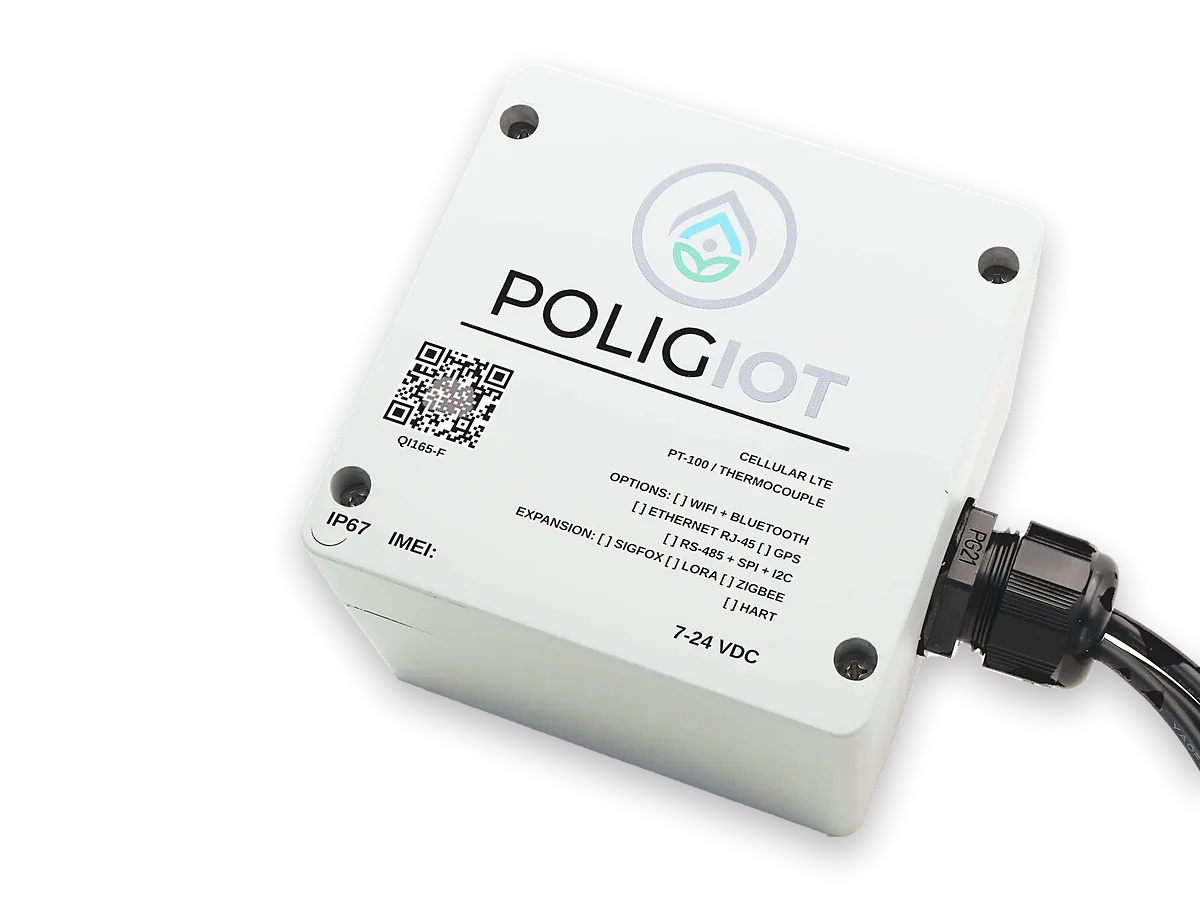
Reading of one temperature sensor (PT-100 or thermocouple) on a single connector, plus an additional standard interface connector.
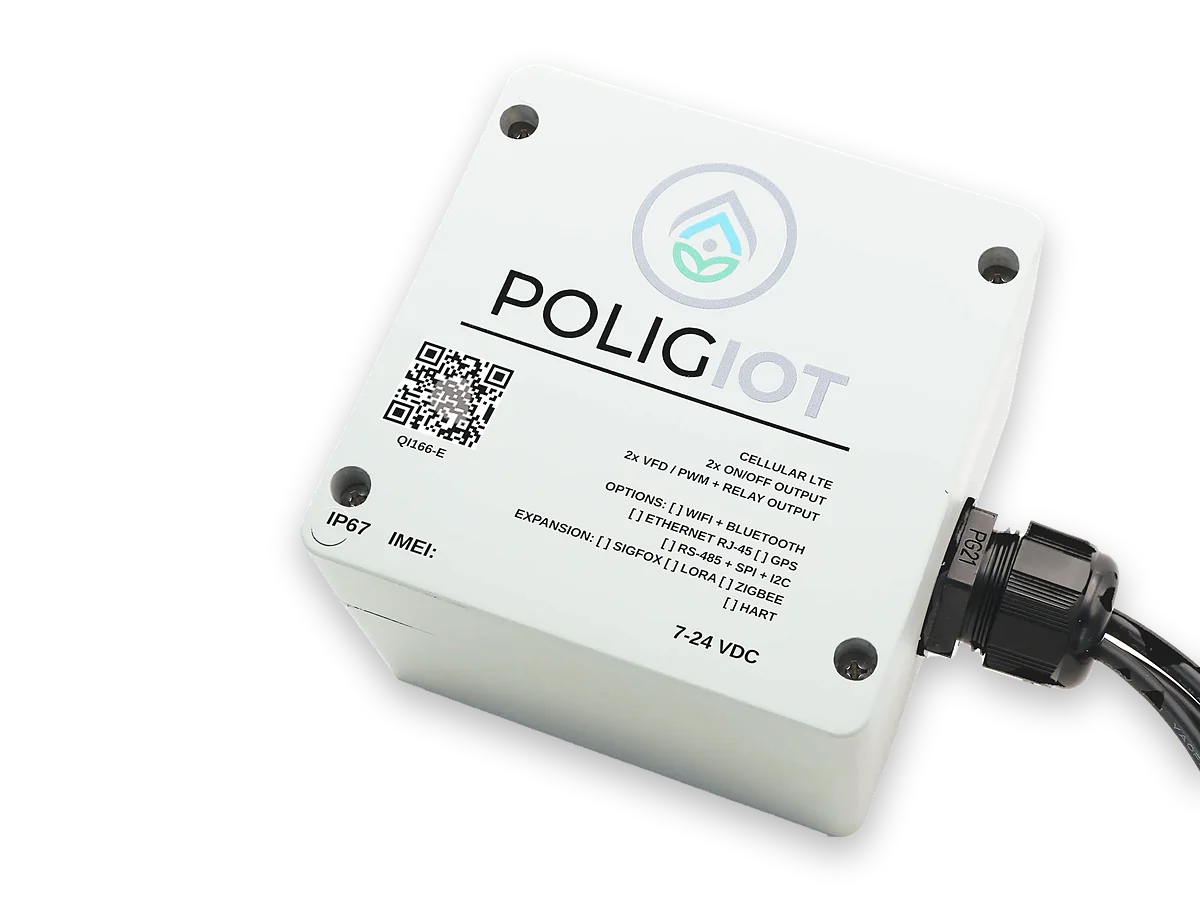
Remote control and actuation of equipment, with 4 independent outputs: 2 digital on/off and 2 frequency inverter commands with relay contacts.
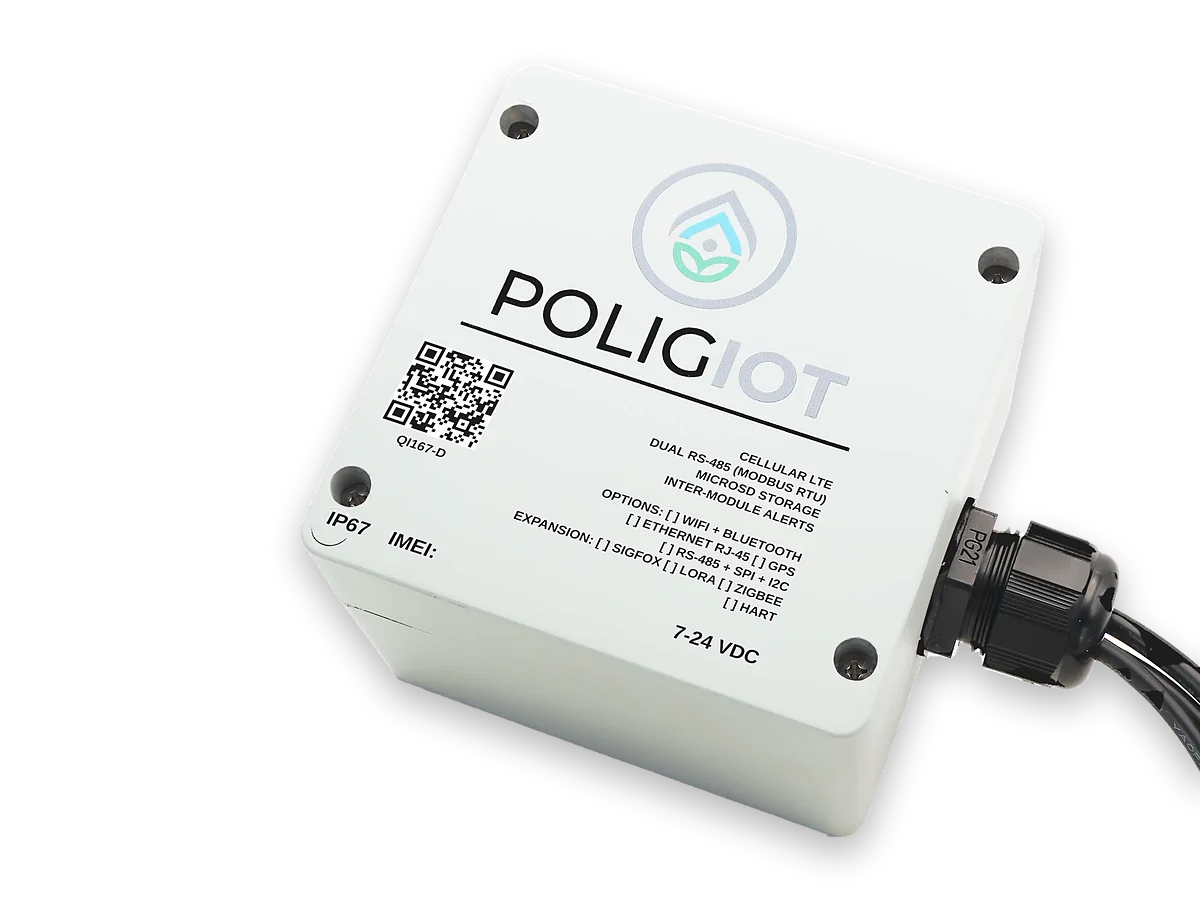
Higher-capacity version for processing and storage, with 2 RS-485 sensors, that receives and sends alert and execution information between modules, online or offline, and connects to local or internet databases.
Each module (2 to 8) has 2 expansion slots, allowing up to 2 add-on boards connected at the same time, to add LoRa, ZigBee, SigFox or HART connectivity depending on the network available on site.
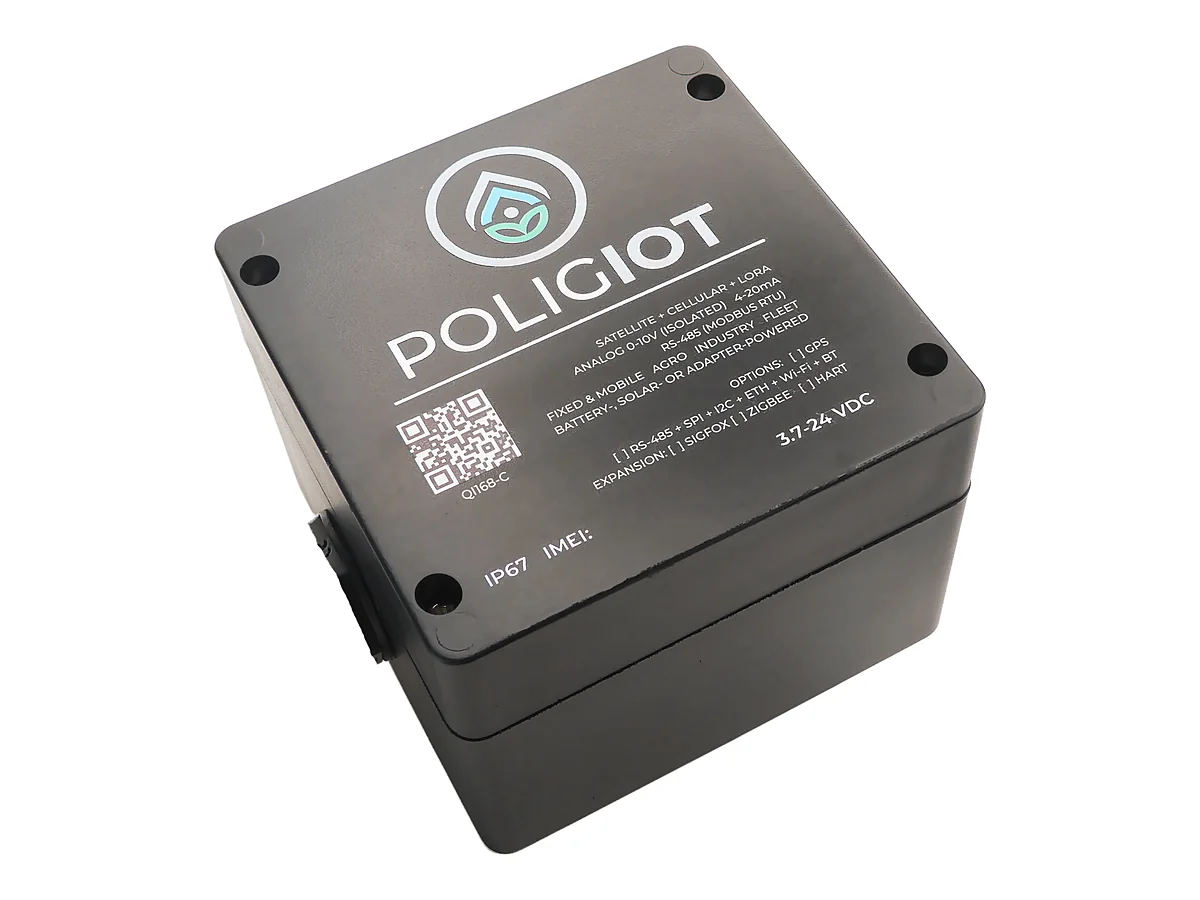
Central node of a sensor network, with cellular, GPS and satellite connectivity. LoRa comes built in, and its 2 expansion slots optionally allow connecting a connectivity card (SPI + I2C + RS-485 + Ethernet + WiFi + Bluetooth) and another wireless expansion card (ZigBee, SigFox or HART), depending on the network available on site.
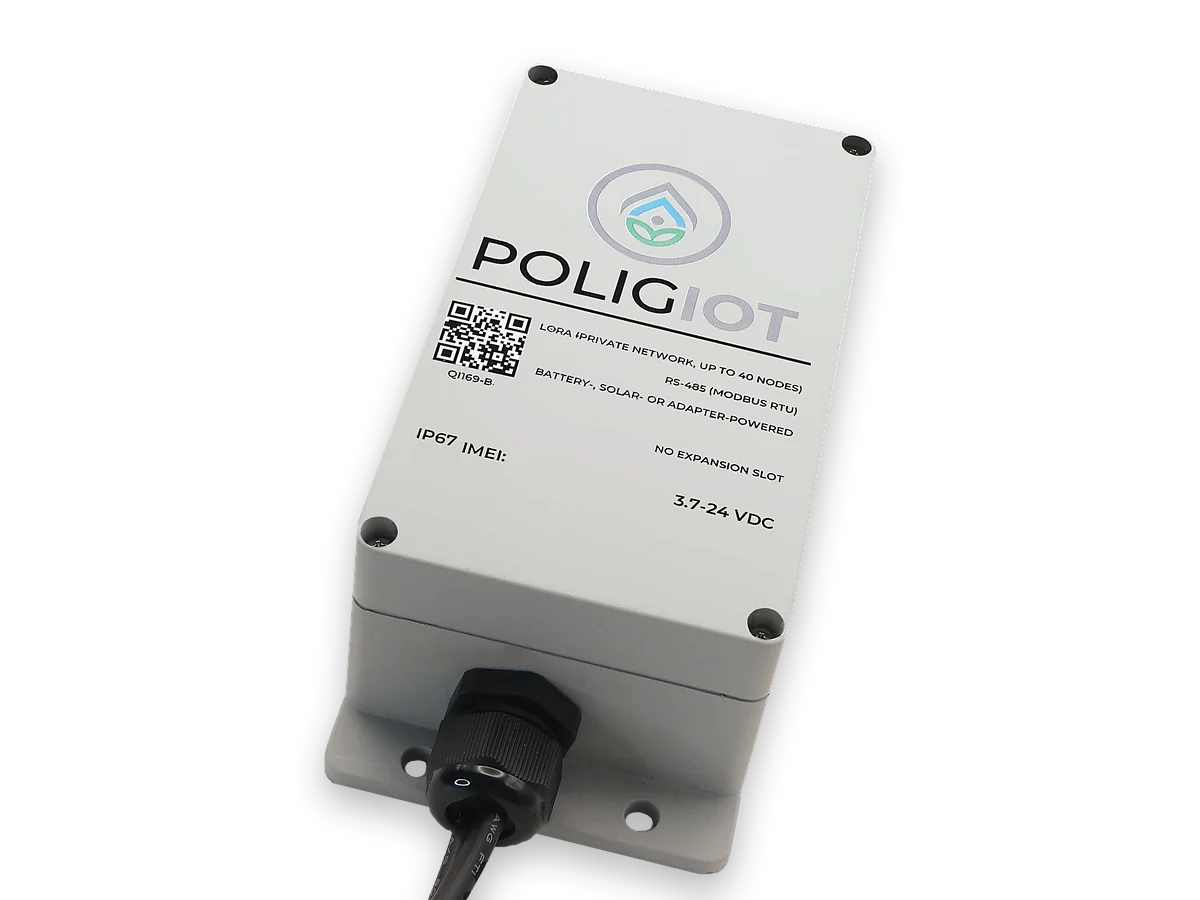
Compact node with 1 sensor on a single connector, that connects to QI168-C, the central node, through a private LoRa network of up to 40 nodes.
Triple connectivity to send data to the platform (satellite, cellular and internet) plus private LoRa and Zigbee networks to connect sensors and devices on site. Each site uses the link available there, without depending on a single operator or on local coverage.
Sends data straight to low-orbit satellites, with no dishes or local infrastructure. It reaches places with no cellular signal: rural areas, mountains, rivers, coastlines and borders.
A cellular network designed for IoT: very low power, good signal penetration in basements, pits and areas far from towers, and low data costs.
Where the site already has internet, the module connects through a network cable (LAN/Ethernet) or Wi-Fi: more data volume, no mobile data costs and direct communication with on-site systems.
Your own closed radio network with no operator fees: it links sensors spread over several kilometers to a single gateway, which sends the data via satellite, cellular or internet.
A local mesh network to control smart devices such as relays, valves, pumps and lighting. It also turns your existing equipment into smart devices you can operate from the platform.
NTN (Non-Terrestrial Network) is the 3GPP standard that lets IoT devices talk directly to satellites using the same NB-IoT technology as cellular networks. Satellites act as cell towers in space: the device transmits with a compact antenna and low power, with no expensive satellite terminals. Our module works with a low-orbit satellite constellation built for IoT.
Built to run on its own for long periods, in fixed installations or on the move.
The module spends most of its time in ultra-low-power sleep and wakes up only to measure and transmit. On lithium batteries it can run for months without maintenance, depending on how often it reads and sends data.
Runs on mains power or on a solar panel with a backup battery. During the day the panel powers the device and charges the battery; at night the battery keeps it running.
Works in fixed installations such as wells, tanks, pumping stations or crops, and also on vehicles and machinery. With built-in GPS, it provides GPS and satellite tracking of vehicles, farm machinery and assets: location, routes and speed for fleet management, even where there is no cellular signal.
Connect the sensors you already use or the ones your project needs: the module speaks the industry's standard protocols and signals.
The most widely used industrial protocol: several sensors share the same pair of wires, at distances of up to 1 km.
For sensors with digital outputs: pulses from flow meters, utility meters and rain gauges, and status contacts such as doors, alarms or running equipment.
The standard of industrial instrumentation: immune to electrical noise and long cable runs, and it reveals a broken wire.
A voltage signal very common in transmitters and automation equipment, such as level, pressure or HVAC.
Adds digital communication on top of the 4-20 mA loop: besides the measurement, it reads secondary variables, diagnostics and instrument settings.
Sensors immune to electromagnetic interference and safe in high-voltage or explosive atmospheres, to measure temperature, strain or vibration over long distances.
Install several sensors, of different types, on the same compact, minimalist communication module. Plug and play: connect it, configure it from the platform and start measuring.
Extend the module to fit each project: more networks, integration with other equipment and local processing.
Long-range, low-power LoRa radio module: it turns the unit into the hub of a private network or connects it to LoRa nodes already in place.
A public, ultra-low-power wide-area network for short, infrequent messages such as alarms, statuses or counters. A useful alternative link wherever a Sigfox operator provides coverage.
A short-range wireless mesh network widely used in meters, actuators and building or industrial sensors. It lets you integrate those devices and control them from the platform.
Communication with HART field instruments, such as pressure, flow, level or temperature transmitters, to read their variables and diagnostics and make the most of the instrumentation already installed.
High-performance local processing: runs machine learning models offline, analyzes high-frequency signals such as vibration and detects anomalies on the device itself, sending only results and alerts. It saves data and keeps responding even without a connection.
Over the local network (LAN) it integrates with on-site systems; its digital outputs switch pumps, valves or alarms; and over HART it talks to field instruments.
Hand in the devices you no longer use and get 5% off each new device that replaces them.
Satellite IoT, connectivity, sensors and power: the questions we hear most.


